
Trai Chairman Anil Kumar Lahoti highlighted the transformative role of satellite communications in expanding seamless connectivity across India, especially in remote areas. He noted that India's space economy is projected to grow significantly, driven by satcom technology that will bridge the digital divide, provide resilient infrastructure during disasters, and support strategic sectors.

Chief Election Commissioner Gyanesh Kumar has affirmed that Indian electronic voting machines (EVMs) are manufactured by public sector companies and operate without internet, Bluetooth, or Wi-Fi connectivity, ensuring their security and reliability.

India has launched the ~62,500 crore Mobile Phone Manufacturing Scheme (MPMS) to incentivise domestic production and strengthen Indian mobile phone brands, offering production-linked incentives and additional benefits for local component sourcing.

The Nifty 50 experienced significant volatility during its closing auction session, leading to losses for both long and short retail options traders due to thin liquidity and rapid price swings, particularly in private-sector banks.

'The fundamental issue that I have raised, how come India's GDP in current prices went down from Rs 86 lakh crore down to Rs 80 lakh crore -- a staggering erasure of Rs 6 lakh crore. This disappearance of Rs 6 lakh crore has not been answered by anyone.'

'The Indian private space sector is no longer a high-risk bet; it is a highly bankable, globally competitive asset class capable of easing the global small satellite launch bottleneck.'

Indian service sector output broadly stabilised in September but remained in the contraction zone as incoming new business fell moderately due to the damaging impact of the pandemic on demand, leading to more job losses.
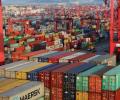
India's trade deficit reached a six-month high of $31.98 billion in July, driven by a sharp increase in imports, particularly crude oil, electronic goods, coal, and fertilisers. Both merchandise exports and imports recorded their second-highest levels during the same period.

'An instruction came from somebody in Delhi saying, "don't go with the launch".'

Their message is blunt: Public scientific wealth should not be transferred at what they describe as 'throwaway prices'.capability, recruitment, promotional avenues and the voice of its employees.

State-run defence major Hindustan Aeronautics Limited (HAL) has delivered LCA Tejas Final Operational Clearance twin-seater trainers and HTT-40 basic trainer aircraft to the Indian Air Force, along with Dhruv next-generation helicopters to Pawan Hans. This significant handover, witnessed by Defence Minister Rajnath Singh, marks a crucial step in India's journey towards self-reliance in the aerospace sector, showcasing HAL's diverse capabilities in military, civil, and training aviation.

The highlight of the successful BRICS Summit was its ability to deliver a joint statement that all members, including Iran and the United Arab Emirates, embroiled in the war in West Asia, signed.

India's services sector activity surged to a seven-year high in January driven by sharp increase in new business orders, leading to job creation and business optimism amid favourable market conditions, a monthly survey said on Wednesday. The IHS Markit India Services Business Activity Index rose from 53.3 in December to 55.5 in January, signalling the strongest upturn in output in seven years.

The market capitalisation of these 41 companies ranged from Rs 30 crore to around Rs 1.26 trillion, as on August 7.

Finance Minister Nirmala Sitharaman has urged the Reserve Bank of India to accelerate its central bank digital currency initiatives, emphasising the need to sharpen capabilities with the digital rupee amidst rapid advancements in tokenisation, agentic AI, and quantum computing. She also highlighted critical concerns regarding cybersecurity, warning that autonomous AI systems are evolving rapidly and require robust safeguards. Sitharaman proposed a federated industry platform to give India's technology ecosystem a collective international voice.

Volkswagen, a long-standing but minor player in India's fiercely competitive automotive sector, is now exploring a strategic partnership with the JSW group, aiming to revitalise its market presence, enhance profitability, and potentially establish India as a key export hub for electric vehicles.

The Insurance Regulatory and Development Authority of India (Irdai) has proposed a phased reduction in the expenses of management (EoM) limits for insurers, aiming to lower the overall cost of insurance and enhance returns for policyholders. The proposals also include a new framework for commissions, stricter measures against mis-selling, and mandatory cost audits.

'Separate needs from wants and minimise discretionary spending.'
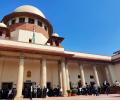
The Supreme Court has agreed to constitute a special bench to address the Centre's plea regarding the applicability of its March 11 judgment on OBC creamy-layer criteria to candidates of the Civil Services Examination (CSE) 2025. The Department of Personnel and Training (DoPT) seeks to proceed with service allocation for 958 recommended candidates based on the creamy-layer determination applied before the verdict, citing potential unequal treatment and disruption to training schedules.

'I don't think the government will sacrifice such a fine institution for monetary gains.'
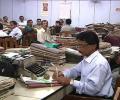
India's services sector lost momentum in July as demand was curtailed by competitive pressures, elevated inflation and unfavourable weather, a monthly survey said on Wednesday. The seasonally adjusted S&P Global India Services PMI Business Activity Index fell from 59.2 in June to 55.5 in July, pointing to the slowest rate of growth in four months. For the 12th straight month, the services sector witnessed an expansion in output. In Purchasing Managers' Index (PMI) parlance, a print above 50 means expansion while a score below 50 denotes contraction.

The Indian government has introduced a 0.4% transaction fee on Unified Payments Interface (UPI) payments exceeding Rs 2,000 for merchants, effective October 15, marking the end of nearly six years of free service. Person-to-person transfers and small-value transactions below Rs 2,000 remain free. The new Merchant Discount Rate (MDR) is capped at Rs 300 for transactions above Rs 75,000, with differentiated rates for essential sectors and investments, and safeguards to prevent costs from being passed to consumers.

'ISRO will not manufacture any launch vehicles. That will all be done by the private sector or public sector undertakings.'

The Indian government has introduced a 0.4% Merchant Discount Rate (MDR) on UPI person-to-merchant (P2M) transactions exceeding Rs 2,000, effective October 15. This move ends nearly six years of fully free UPI payments, though person-to-person (P2P) transfers and small P2M payments remain free. The charges aim to bolster investment in UPI infrastructure, with specific exemptions and caps for essential sectors.

Economists highlight that resolving domestic policy bottlenecks, particularly through land reforms and improving the ease of doing business, will be critical for Prime Minister Narendra Modi's 'next-generation reforms' and India's economic transformation towards its 'Viksit Bharat' vision for 2047.
The Telecom Regulatory Authority of India (Trai) has expanded the 1600-number series to include utilities, courier, and logistics companies, introducing the new 1601 series to help consumers identify legitimate calls and prevent widespread fraud and impersonation.

The Indian government has amended its e-commerce rules to enhance price transparency, prevent manipulation of search results, mandate clear disclosure of sponsored listings, and combat 'dark patterns' to protect consumers.

India's statistics ministry has defended its newly released economic growth estimates, stating that revisions to last year's GDP and the divergence between different price measures reflect updated data and estimation techniques rather than an attempt to artificially boost headline growth.

Prime Minister Narendra Modi announced that the India-UK Comprehensive Economic and Trade Agreement (CETA) will come into effect on July 15, 2026, anticipating a significant boost to bilateral trade and investment.
The headline seasonally adjusted Nikkei India Composite PMI Output Index, that maps both the manufacturing and services sectors, rose from 53.3 in June to 54.1 in July.
Left parties have strongly condemned the government's decision to impose charges on UPI payments exceeding Rs 2,000, with CPI General Secretary D Raja alleging the move was made under "US pressure" to favour foreign payment companies. Both CPI and All India Forward Bloc demand the withdrawal of this "anti-people decision," arguing it burdens consumers and merchants while undermining UPI's role as a public digital infrastructure. They highlight concerns that the charges weaken India's digital sovereignty and serve commercial interests of foreign corporations like Visa and Mastercard.

India's fresh investment plans in Q1FY27 surged 71 per cent to 14.77 trillion, primarily driven by four large nuclear power projects worth 6.5 trillion, according to investment monitoring firm Projects Today. Excluding these nuclear projects, fresh investment plans actually declined 4.27 per cent quarter-on-quarter.

Potential external candidates include Anup Bagchi, Rajiv Sabharwal and CSB Bank's Pralay Mondal.

'The way the government behaves, sometimes I ask myself: Are not Tamils Sri Lankans too? Why do you discriminate so much?'


Newly listed companies Vedanta Aluminium Metal, SBI Funds Management and Manipal Health Enterprises have entered the Rs 1 trillion mcap list since March 2026.

Sashidhar Jagdishan, the managing director and CEO of HDFC Bank, has announced his decision not to seek reappointment and will retire at the end of his current term on October 26, concluding a six-year tenure marked by significant regulatory and governance challenges, including RBI restrictions, a major merger, and scrutiny over alleged illegal payments.

LIC is the only brand in the Brand Finance India 100 2026 report that has a top five rank in both brand value and brand strength.

India's services sector activity expanded at the second-fastest pace in more than a decade during November, driven by sustained rise in new work and improvement in market conditions, a monthly survey said on Friday. The seasonally adjusted India Services Business Activity Index was at 58.1 in November, fractionally down from 58.4 in October. The November figure points to the second-fastest rise in output since July 2011. For the fourth straight month, the services sector witnessed an expansion in output.

'Improved law and order and transparent governance have helped change UP's investment image.'
